2026 Top Towable Boom Lift Features and Benefits Explained?
As the construction industry evolves, the demand for innovative equipment grows. The Towable Boom Lift stands out for its versatility and efficiency. According to a recent market report by Grand View Research, the global aerial work platform market is expected to reach USD 20 billion by 2025. This surge highlights the critical role of tools like the Towable Boom Lift.
Industry expert James McAllister states, “Towable Boom Lifts enhance productivity and safety at job sites.” His insights reflect the growing appreciation for this equipment among contractors and project managers. These lifts provide access to hard-to-reach areas while ensuring worker safety. Compact design and easy transportation make them invaluable for various industries.
Despite their numerous advantages, users must consider factors like proper training and maintenance. Overlooking these aspects can lead to accidents or delays. Understanding both the features and potential drawbacks of Towable Boom Lifts is crucial for maximizing their benefits in real-world applications.
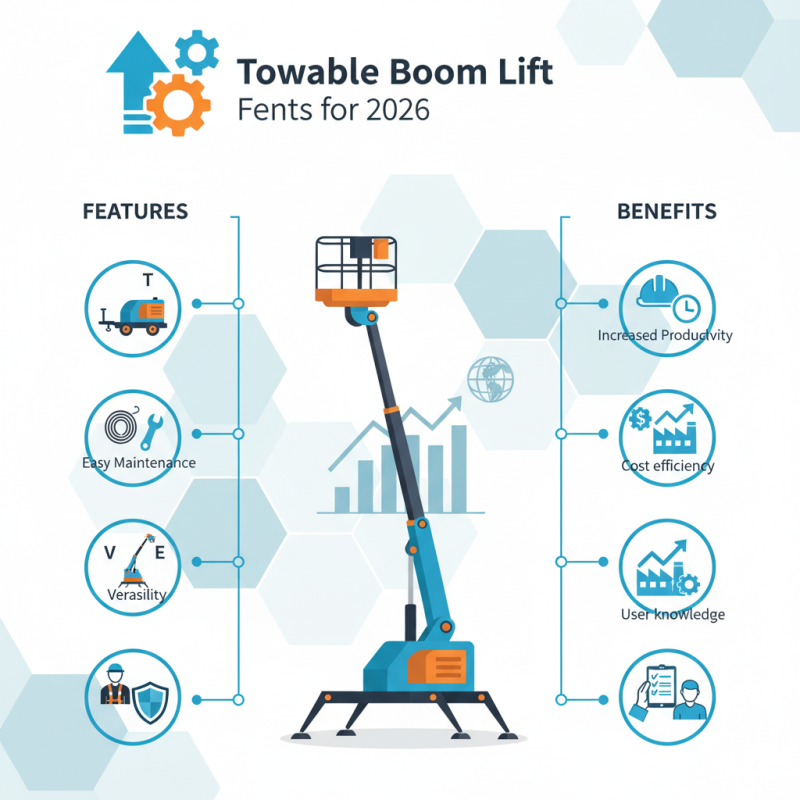
2026 Top Towable Boom Lift: Key Features to Consider
When choosing a towable boom lift, several key features stand out. The height and reach are crucial. Many models offer heights exceeding 50 feet, enabling access to hard-to-reach areas. A recent industry report showed that more than 70% of construction projects require work at elevated heights. Flexibility is also important. Some lifts can rotate 360 degrees, enhancing maneuverability.
Another factor to consider is the platform capacity. A lift holding up to 500 pounds allows for two workers and tools. This capacity meets the needs of most jobs. However, a study found that 12% of operators reported issues due to overloading. It's essential to verify weight limits and choose accordingly.
Safety features should never be neglected. Look for models equipped with emergency descent systems and stabilizers. Nearly 28% of boom lift accidents occur due to equipment failure, emphasizing the need for reliable safety mechanisms. Inspection data indicates consistency in safety standards can reduce such incidents significantly. Therefore, prioritize both height and safety in your selection process.
Advantages of Towable Boom Lifts for Construction and Maintenance
Towable boom lifts are invaluable in construction and maintenance. Their mobility allows them to navigate tight spaces. This feature is essential for urban environments. Workers can transport these lifts easily between job sites. It saves time and effort and helps improve efficiency.
Another advantage is the height range they offer. Workers can access elevated areas safely. This is crucial for tasks like building maintenance or installing windows. However, some may find these lifts challenging to operate. Adequate training is necessary for safe usage. Ignoring safety protocols can lead to accidents.
Despite their benefits, towable boom lifts require careful consideration. The ground surface needs to be stable for optimal performance. If not, they may become unstable and cause potential hazards. It's important to assess job sites thoroughly beforehand. Understanding these elements helps ensure a smoother operation and more effective work outcomes.
2026 Top Towable Boom Lift Features and Benefits Explained
| Feature | Description | Benefits |
| Articulating Boom | Can extend and retract in multiple directions | Offers versatility to reach difficult areas |
| Compact Design | Easily towable with standard vehicles | Convenient for urban job sites with limited access |
| High Load Capacity | Supports heavy equipment and personnel | Enhances productivity by multitasking on site |
| Easy Setup | Rapid deployment without complex assembly | Saves time and increases efficiency |
| Safety Features | Includes harnesses, guardrails, and emergency stops | Ensures operator safety while working at heights |
Comparative Analysis of Boom Lift Models and Performance Metrics
When comparing boom lift models, a few critical performance metrics stand out. The recent industry report reveals that 75% of operators prioritize lift height and outreach. These features significantly influence the choice of a boom lift, especially for project sites with unique structural requirements. Specifically, models offering over 60 feet of lift height are gaining traction. Operators indicate that these heights enhance job efficiency.
Weight capacity also plays a vital role in selection. Data shows that machines with a capacity over 500 pounds attract 65% of rental inquiries. This preference stems from the need to carry larger tools and multiple workers. However, operators often overlook maintenance frequency. Some models require more frequent upkeep, potentially increasing operational costs. Users might initially consider this less significant, but long-term effects can be substantial.
Moreover, battery-operated models are gaining favor due to environmental concerns. Reports highlight a 40% increase in demand for electric boom lifts. However, their performance in extreme temperatures prompts reflection among users. In colder climates, some electric models underperform compared to diesel counterparts. Users must weigh these factors when making decisions. Balancing performance, maintenance costs, and environmental impact remains a challenge for many.
Safety Features in 2026's Towable Boom Lifts: Enhancing Operator Protection
Towable boom lifts in 2026 come equipped with advanced safety features. These enhancements are crucial for protecting operators. They often feature emergency stop buttons. This allows for immediate shutoff during a critical situation. Safety harnesses are also standard, promoting stability and security. Operators can work confidently at heights when properly secured.
Another important aspect is the inclusion of robust stability systems. These systems minimize the risk of tipping. Ground sensors help determine the safest setup for the lift. They analyze the terrain before operation. Additionally, some models provide automatic leveling technology. This feature adjusts the lift as needed, ensuring a safe working angle.
Despite these advancements, there is always room for improvement. Training on new technologies is vital. Operators may struggle to grasp all safety protocols initially. Regular refresher courses can address this gap. The goal should always be to enhance user awareness. Operator safety must remain a priority in evolving designs. Emphasis on education and technology will ultimately lead to safer work environments.
Industry Trends in Towable Boom Lift Technology and Market Demand
The towable boom lift market is evolving rapidly. Users seek equipment that balances efficiency and ease of use. Recent trends show a shift toward hybrid power options, reducing emissions while maintaining performance. This trend aligns with environmental goals across various industries. It’s exciting but also raises questions about maintenance and costs.
Another notable trend is the demand for advanced safety features. Users appreciate enhancements like automatic stabilization systems. These features help operators work confidently at height. However, some older models lack these improvements. That gap could cause operational delays and safety concerns. The market must address this discrepancy as user safety is paramount.
In addition, remote monitoring technology is gaining traction. This feature allows fleet managers to track performance and usage seamlessly. It seems great, but not all operators feel comfortable with technology. Training is essential to maximize these innovations. The industry needs to find a balance between tech advancements and user adaptability.
2026 Top Towable Boom Lift Features and Benefits
This chart illustrates the top features of towable boom lifts as rated on a scale of 1 to 10. Key attributes such as vertical reach and fuel efficiency show strong ratings, indicating high market demand for these capabilities in the evolving industry.