How to Choose the Right Conveyor Belt Rollers for Your Needs?
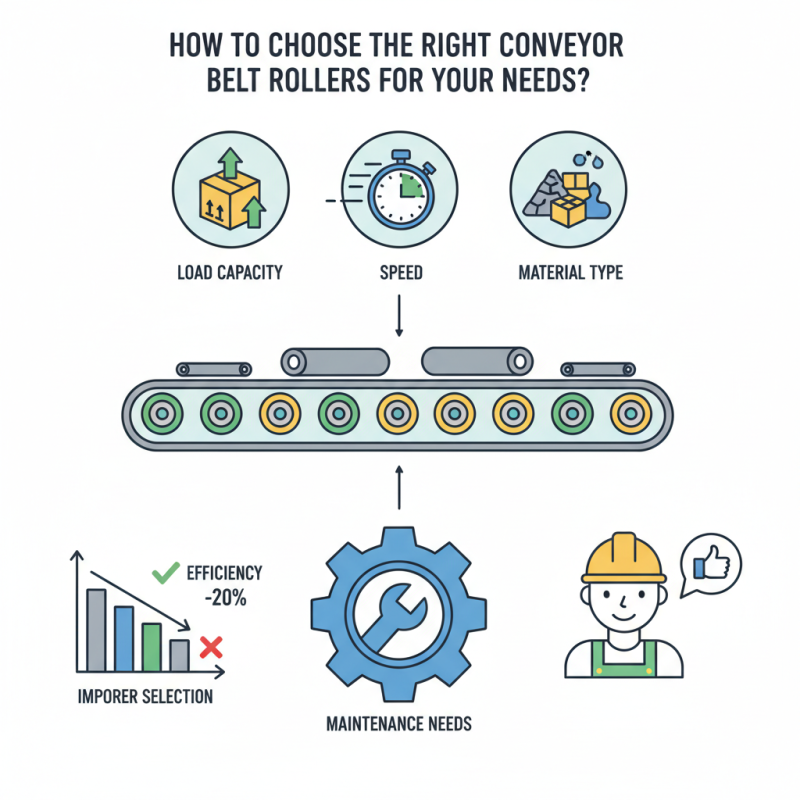
Selecting the right conveyor belt rollers is crucial for efficiency. According to a recent industry report by the Conveyor Equipment Manufacturers Association, improper roller selection can reduce system efficiency by up to 20%. This statistic underlines the importance of making informed choices.
Experts agree on the significance of quality in conveyor belt rollers. John Smith, a renowned industry specialist, emphasizes, “Choosing the right rollers can significantly enhance operational performance.” This statement highlights that the right components are essential for maximizing productivity in material handling systems.
Yet, many businesses still struggle with this selection process. Factors such as load capacity, speed, and material type often complicate decisions. Additionally, overlooking maintenance needs can lead to costly downtimes. Understanding these elements is vital to ensure optimal operation and avoid operational failures.
Understanding the Different Types of Conveyor Belt Rollers
When choosing conveyor belt rollers, it’s essential to understand the different types available. Rollers can significantly impact productivity. According to industry data, nearly 30% of conveyor system malfunctions relate to roller issues. This statistic highlights the importance of selecting the right type.
There are various rollers to consider. For instance, idler rollers support the belt and prevent sagging. They can be either rubber-coated or steel, depending on the application. Additionally, tension rollers adjust the belt tension, ensuring smooth operation. Each type serves a distinct purpose.
Another important factor is load capacity. Some rollers are rated for lighter loads, while others can handle heavy materials. The wrong choice can lead to breakdowns. In fact, research shows that improper roller selection can reduce system efficiency by over 20%. Understanding these differences is crucial for any operation.
Assessing Load Capacity and Weight Requirements for Your System
When selecting conveyor belt rollers, assessing load capacity and weight requirements is vital. Research indicates that conveyor systems can handle loads ranging from a few pounds to several tons. Understanding your specific needs is crucial to ensure efficiency. Incorrect load calculations might lead to roller failure, downtime, and costly repairs.
Pay attention to the weight of your materials. It often fluctuates based on product type and packaging. For example, bulk materials may weigh more than packaged goods. The weight affects roller selection; heavier loads need sturdier rollers. Use tools like load calculation charts to guide your decisions. These charts provide insights based on industry standards.
Tips: Always overestimate your load requirements. This precaution accounts for potential increases or additional materials. Also, consider the roller material. Steel offers durability, while plastic is lighter but may not suit heavy loads. Reassess your system periodically to adjust for any changes in load over time. Neglecting this can lead to inefficiencies.
Evaluating the Material and Durability of Conveyor Belt Rollers
When choosing conveyor belt rollers, material and durability are key factors. Various materials such as steel, plastic, or rubber offer different benefits. Steel rollers excel in strength, while plastic rollers are lighter and corrosion-resistant. Rubber rollers provide a quiet operation, making them ideal for certain environments.
Tips: Consider the operational environment. If moisture is a concern, corrosion-resistant materials will extend the lifespan of your rollers.
Durability often depends on the roller's construction. Look for reinforced designs when dealing with heavy loads. A miscalculation here can lead to frequent replacements, which costs time and money.
Tips: Regularly inspect your rollers for wear. Early detection can prevent larger issues down the line. Take notes on any abnormalities during your inspections to improve future choices.
Durability Comparison of Conveyor Belt Roller Materials
This bar chart illustrates the durability ratings of various conveyor belt roller materials. Steel has the highest durability score, making it ideal for heavy-duty applications, while plastic offers lower durability, suitable for lighter loads.
Considering Environmental Factors in Roller Selection
When selecting conveyor belt rollers, environmental factors are crucial. Industries today face various challenges, such as temperature extremes, humidity, and exposure to corrosive materials. According to a report by the Conveyor Equipment Manufacturers Association, more than 40% of conveyor failure is attributed to improper roller selection for the working environment.
Temperature is a significant consideration. For instance, some materials may become brittle in cold conditions, while others may warp in heat. Roller materials need to withstand these extremes. A study showed that using steel rollers in wet environments can lead to rust. This can shorten their lifespan by almost 30%. Humidity can impact the belt's performance too, as wet systems require rollers with enhanced drainage capabilities.
Corrosive substances present an additional challenge. Many industries operate in environments where chemicals are prevalent. Rollers should be constructed from materials resistant to these chemicals. Surprisingly, many businesses still overlook this. Some workers may not understand how corrosive exposure affects roller integrity. Investing in suitable materials can lead to reduced downtime and maintenance in the long run. This is essential for maintaining efficient operations.
Determining Maintenance Needs and Cost Efficiency of Rollers
When selecting conveyor belt rollers, maintenance needs are crucial. Reports indicate that proper maintenance can reduce downtime by up to 30%. Avoiding unexpected breakdowns saves both time and costs. Regular checks on roller alignment and wear can prevent costly issues.
Cost efficiency plays a significant role in roller selection. A study showed that high-quality rollers can increase system efficiency by more than 20%. Lower-quality options may seem cheaper but can lead to higher long-term expenses. Investing in durable rollers often pays off, providing better load distribution and reduced energy consumption.
Maintenance schedules should focus on inspection frequency. For environments with heavy loads or debris, daily checks may be necessary. Lack of proper monitoring can lead to failures that disrupt operations. Finding that balance between maintenance and cost can be challenging but essential for maximizing performance.
How to Choose the Right Conveyor Belt Rollers for Your Needs?
| Roller Type | Material | Load Capacity (lbs) | Maintenance Frequency (months) | Cost ($) | Cost Efficiency (1-10) |
| Heavy-Duty Steel Roller | Steel | 2000 | 12 | 150 | 8 |
| Standard PVC Roller | PVC | 1000 | 8 | 80 | 9 |
| Light-Duty Aluminum Roller | Aluminum | 500 | 6 | 60 | 10 |
| High-Temperature Roller | Steel with Heat Resistance Coating | 1500 | 10 | 120 | 7 |
| Corrosion-Resistant Roller | Stainless Steel | 1800 | 15 | 200 | 6 |